How to Trade Meme Coins for Real Gains in 2026 Without Blowing Up Your Account
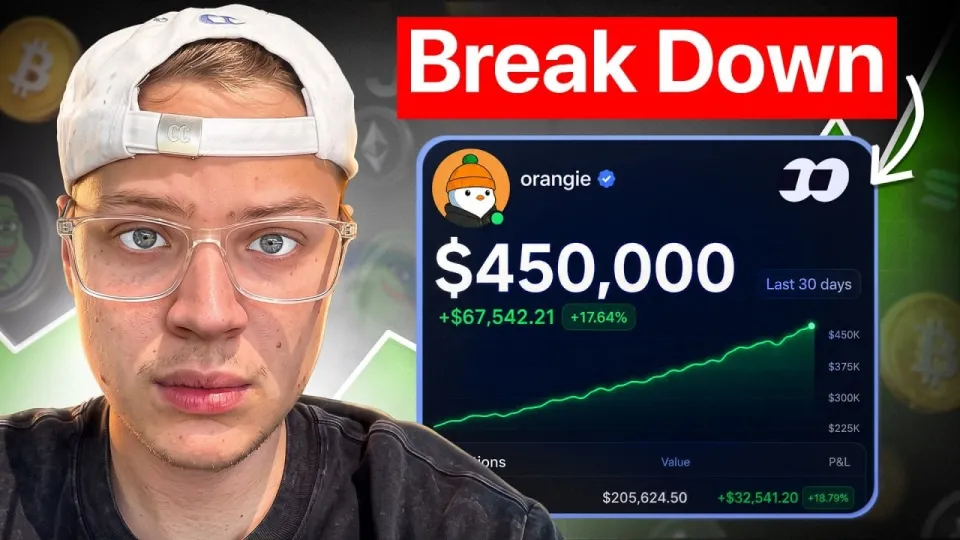
Video: How I Made $450,000 Trading Memecoins in 30 Days
Want articles like this for your own video to promote it on YouTube and Google? Order them through the Telegram bot @sat_sit_bot. Articles with your video embedded are written and posted by the bot itself — on popular topical sites (no ads). Your first 50 articles are free.
Meme coins are highly volatile crypto tokens with no cash flow, product or roadmap, whose price is driven almost entirely by attention and liquidity. Trading them profitably in 2026 means treating them as a probability game: many small positions, strict sizing, fast exits and the expectation that most trades go to zero. The approach Orangie Web3 breaks down in his $450,000-in-30-days run is built on exactly that discipline, and the paid Kaizen group he points viewers to is available through the Kaizen checkout page.
What a meme coin actually is and why it moves so fast
A meme coin is a token whose value rests on a joke, a character or a community rather than on revenue, and that is precisely why it can multiply in hours or collapse in minutes. On Solana, where most of this activity happens, anyone can mint a token for a few dollars, seed a bonding curve, and let buyers push the price until the token "graduates" to a real liquidity pool. Before graduation the price is set by the curve mechanics; after graduation it is set by order flow on a decentralized exchange, and that is where the violent swings live. Names like Dogecoin are the old guard, but the current cycle's action is in fresh Solana launches that live and die within days. The key mental shift: you are not investing in a business, you are trading a liquidity event.
How the $450,000 result was actually built
The headline number came from compounding many medium-sized wins, not from one lucky lottery ticket. In the video's framing, the trader runs a high-frequency process across dozens of launches, cuts losers quickly and lets the occasional 5x–20x position carry the month. Three things make that arithmetic work:
- Position sizing. Each bet is small relative to the bankroll, so five consecutive losses do not end the session.
- Speed of exit. Losers are closed in minutes, not held in hope; winners are scaled out into strength rather than round-tripped.
- Deal flow. The edge is seeing a launch early, which is why private groups and tools matter more than chart patterns.
A viewer in the comments describes exactly this dynamic from the other side: down roughly 90% on a $100 learning position, then a single hit on a coin tripled the remaining money. That is the shape of the distribution — brutal on most trades, generous on a few.
The infrastructure: launchpads, FOMO and trading terminals
Most meme coin trades in 2026 happen through a small set of interfaces, and knowing which one you are on changes your risk. Launchpads let you buy on the bonding curve before a token has a public pool; terminals like the one promoted in the video aggregate new pairs, holder data and one-click buys. Orangie links his own entry point at fomo.family/r/orangie, which is a referral link to the FOMO trading platform, and viewers in the comments repeatedly mention starting there with small balances. Whatever terminal you use, check three things before buying: whether the token has graduated, how concentrated the holder list is, and whether liquidity is locked or removable by the deployer.
Why community and deal flow beat screen-watching
A meme coin trader's real edge is information timing, and that is the most contested point in the comment section under the video. One of the most-liked comments argues the creator is in a Discord with top traders who snipe every coin the group calls and help each other out — in other words, the audience sees the trade after the insiders do. That criticism is worth taking seriously rather than dismissing. Public calls are usually late calls; by the time a coin is on a YouTube thumbnail, the early buyers are already distributing. The practical response is not to chase those calls but to build your own watchlist of wallets worth following, and to accept that any group — free or paid — puts you somewhere in the queue, not at the front. The creator's own community link is the memecoins Discord, and his social updates sit at instagram.com/orangieyt.
Common questions and doubts from newer traders
The recurring doubts in the comments are less about strategy and more about execution under pressure. Several viewers ask for slower explanations, others want the reasoning behind each entry and exit rather than just the outcome, and one notes that the presentation jumps between points. Those are fair asks, and they point at a real gap: watching someone trade is not the same as having a repeatable checklist. If you are new, write down before each buy what would make you exit — a market-cap target, a time limit, or a percentage stop — and treat that note as binding. Another frequent theme is motivation after a loss; the honest answer is that losing most of a small test position is tuition, and the lesson only pays off if the next position is sized the same way rather than doubled to recover.
Risk rules that keep meme coin trading survivable
Meme coin trading is survivable only if you assume total loss on any single position, because that is a realistic outcome. Concretely: never deploy rent money or borrowed funds; cap each position at a small fixed percentage of your trading bankroll; avoid tokens where a handful of wallets hold most of the supply; and expect drawdowns that look catastrophic on a daily chart. Rug pulls, deployer dumps and liquidity removals are routine, not edge cases. The traders who last are the ones who treat a 90% loss on one coin as an expected cost of doing business and keep the process identical on the next trade.
Useful links
- Kaizen group access: https://whop.com/checkout/plan_GTFkEFh0JFpU8?a=orangie
- FOMO trading platform: https://fomo.family/r/orangie
- Discord community: https://discord.gg/memecoins
- Instagram: https://www.instagram.com/orangieyt/
Final thoughts on trading meme coins responsibly
The $450,000 figure is a marketing headline as much as a trading result, and it is worth reading it as a case study in process rather than a promise of returns. Orangie Web3's breakdown is useful precisely because it shows the mechanics — launchpads, graduation, fast exits, small sizing — that sit behind the number, while the comment section shows the other side: 90% losses, late entries and the gap between watching and doing. If you take one thing from the analysis, take the sizing rule, not the target. And if you want the full workflow including the group and terminal he uses, start at the Kaizen checkout page and treat everything you deploy there as money you can afford to lose entirely.
Key takeaways
- Meme coins are high-volatility tokens launched mostly on Solana, where a single 3x hit can offset a string of near-total losses.
- Most coins die after launch; survival odds improve once a token graduates past its bonding curve to a real liquidity pool.
- Orangie Web3's $450,000-in-30-days result came from many small positions, not one all-in bet.
- Community access matters: the traders who see calls first are usually in private groups, not scrolling public feeds.
- Risk rule: only deploy capital you can lose entirely, because a 90% drawdown is a normal outcome, not an exception.
Source: How I Made $450,000 Trading Memecoins in 30 Days · Markdown version
Questions & answers
How much money do you need to start trading meme coins?
You can start with very small amounts — viewers in the comments describe testing with around $100 — but the important number is not the starting balance, it is the size of each position relative to it. Keep every single bet to a small fixed percentage so a run of losses does not wipe the account.
Why do most meme coins lose value so quickly?
Most tokens launch with no product, thin liquidity and a concentrated holder list, so once early buyers sell there is nothing to support the price. Tokens that never graduate from the bonding curve simply fade, and even graduated ones can be dumped by the deployer.
Is following calls from a paid group or Discord enough to be profitable?
No, and the comment section under the video makes this point sharply: members of private groups typically buy before the public call goes out. Use groups for deal flow and education, but build your own exit rules and expect to be later than the insiders.
What is the single most important rule for meme coin risk?
Assume any position can go to zero and size it accordingly. That means no borrowed money, no rent money, a fixed cap per trade, and a written exit plan before you buy rather than after the price drops.